Sunday, March 24, 2013

Sayonara Japan

I haven't blogged for awhile because we've been working so hard every day on our new Hawaii property, which I'll blog more about in days to come. And that means I haven't yet written a final blog post for our Japan trip, which is a shame as it really was one our best trips ever. Japan – or Kyoto at least – is the epitome of what civil society should look like: clean, efficient, safe, modern yet historical. There's virtually no graffiti, no litter, and very little crime. The cab drivers wear caps and white gloves, and the people put a premium on being courteous and considerate to each other. All this and heated toilet seats. What a country. We'll be back.

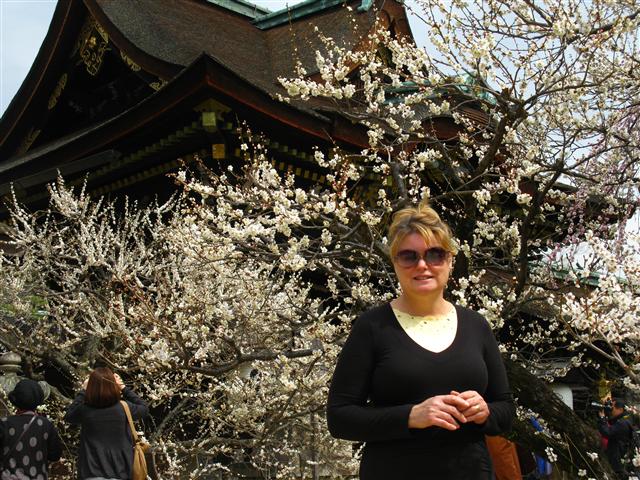
 Appreciating the plum blossoms and the coming of spring. 


 Photographing plum blossoms is serious business.


 Plum blossoms


 Beautiful tree on the grounds of Shoren-in Temple


 Roof tile detail


 Potter (not Harry).  The traditional arts are particularly cherished in Kyoto.


 Chion-in


 Shrine gate detail


 A Maiko (apprentice Geisha) off to an appointment.

Sunday, March 17, 2013

Osaka

Osaka is second only to Tokyo as Japan's economic powerhouse. Deborah had been to both cities on her previous Japan trip, but I wanted get my own taste of ultra-urban Japan on this trip, and Osaka is an easy day trip from Kyoto. To get the most out of our day we decided to take a guided walking tour in English. It was a new venture for the same tour company that provides similar services in Kyoto – so new in fact that we were their first and only customers. So we had what turned out to be a private tour with our guide Shomi. As an Osaka native, she had a lot of insight into the people and culture of Osaka and how it differed from Kyoto.

While Kyoto is classy, refined and traditional, with hundreds of temples and shrines and limits on building heights, Osaka is jovial, modern and edgy, with skyscrapers and lots of neon. Osaka is not an attractive city – think endless expanses of dreary concrete boxes. But it makes up for this with colorful commercial signage, flashily dressed youth and nighttime neon. Here are some pics.

 Osaka commercial signs are not subtle.


 Tsutenkaku Tower was originally built in 1903, partially patterned after the Eiffel Tower.  It was damaged by fire in 1943 and then disassembled to support the war effort, but was rebuilt in 1956.  It advertises the Hitachi brand.


 Deborah finds a hairdressing comrade.


 Anime and manga pop culture is big here.  There is even a restaurant chain called Maid Cafe where young attractive waitresses dress and act like maid characters from the comics and address their typically young male girlfriend-less clients as "master."  It's kind of a Hooters for geeks.

 
 Those are sumo wrestlers depicted on the building on the left.  It's a good bet that the place on the right is a restaurant that serves blowfish.


 Plastic food displays are an art.


 There is an entire shopping arcade where restauranteurs can acquire anything kitchen related, including amazingly realistic plastic food for their displays.


 The young and fashionable.


 Check out those nylons and shoes.  By the way, we have found out the primary reason for all the face masks is to filter out pollen, which probably actually works.


 Of course, the masks could just be a fashion statement.


Although it can't compete with Kyoto in the temple and shrine department, Osaka does have its share of sacred places, including this one where worshipers regularly sprinkle nourishing holy water on what can only be called a Chia Pet Buddha.


 Or maybe this guy is under all that greenery.


 The neon madness.


Saturday, March 16, 2013

A Quick Note

Just a quick not to let everyone know we're back in Hawaii now, but I still want to catch up with a couple more blog posts on our amazing experience in Japan. Look for that soon, followed by more Hawaii blog posts as we work on prepping our newly acquired property.

Cats in Kyoto - part of a large community of apparently wild but friendly and well-fed cats along the Path of the Philosophers.

Wednesday, March 13, 2013

Religiousity

Although you wouldn't know it in temple- and shrine-saturated Kyoto, most people in Japan aren't religious. At least two thirds tell pollsters they do not consider themselves believers in any religion. Those that do almost always follow either Buddhism or Shinto, or a kind of flexible, complex combination of the two. Shinto is the ancient, indigenous, nature-based polytheistic religion of Japan. Buddhism arrived from China via the Korean Peninsula in the sixth century and eventually came to dominate. What is interesting is how accommodating each religion has been to the other, such that you can often find a Shinto shrine in a Buddhist temple complex. Minority religions like Judaism, Christianity, Islam, Hinduism and Sikhism have a presence in this country with full religious freedom, but their presence is only a small one. Only about 1% of the population, for instance, are Christians.

The Japanese people – even the non-religious ones – enjoy participating in rituals and ceremonies derived from various religious traditions as part of their culture, even if they don't take the underlying religious beliefs too seriously. Births are often marked by a formal ceremony at a Shinto shrine, as is the passage into adulthood. Weddings are often performed by Shinto priests, but often in a Western-style ceremony at the chapel of a luxury hotel, with reception to follow in the same facility. Funerals are usually conducted by Buddhist priests. Many Japanese also celebrate Christmas, Valentine's Day and Halloween in addition to the holidays of Shinto and Buddhist origin, as well as many secular holidays. Any excuse for a party I guess.

From the perspective of a non-religious tourist, I'm very glad that the Japanese have managed to maintain a tolerance for irreligion and science while still preserving the beautiful architectural and cultural legacy of its religious heritage. Best of both worlds in my view.


 Every Shinto Shrine has one of these Torii gates marking the entrance


 At Fushimi-Inari Shrine they have literally hundreds, closely spaced, which form these corridors.


 Worshipers at Fushimi-Inari.  They follow a specific sequence of ritual hand and mouth washing, offering, bowing, ringing the bell, more bowing, clapping, more bowing, etc.


 At Fushimi-Inari.


 Graceful temple architecture.


 The Buddhists are pretty good gardeners as well.


 Buddhist Fish.


 Shinto Priest


 Buddhist Monk - not a good career choice if you are into your hair.


 Todai-ji Temple's Daibatsu-den in the city of Nara.  This is the largest wooden building in the world.  Amazingly, the present structure, which was rebuilt in 1709, is only two thirds the size of the original.


 You need a building that big to house a Buddha this big.  This one is over 50 feet (16 m) tall and is one of the largest bronze figures in the world.


 These tiny shines (probably not the right term) are found all over Kyoto.  The swastika-like symbol actually dates back to ancient India and has been used as a sacred symbol in Buddhism for centuries.  One of Hitler's marketing hacks had an interest in ancient philosophies and encouraged its adoption (albeit as the mirror image) as a symbol of the Nazi Party, thereby ruining it for everyone.


 Plum blossoms are appearing, only enhancing the beautiful temple buildings.


Saturday, March 9, 2013

The Language Barrier

Japanese is a complicated language – particularly in its written form. Three different alphabets (or character sets, more precisely) are used: kanji, characters of Chinese origin; and two home-grown syllabic scripts called hiragana and katakana (together called kana). The Latin letters and Arabic numbers we're familiar with are also sometimes thrown into the mix. Sometimes Japanese is written western style with horizontal rows read left to right and top to bottom. Sometimes it is written in traditional Japanese style with vertical rows read top to bottom and right to left. Wow, huh?

But the language barrier has been much less than I anticipated on this trip. Deborah has noticed a big improvement since she was here 18 years ago in the existence of English translations on, for instance, street signs at major intersections. When we take a train or bus the station/stop announcements are displayed in English as well as Japanese. Ticket vending machines often have an English Guidance button. ATMs always do (although not all work with international cards). A lot of the temples, gardens and other attractions have English language brochures. Some restaurants have English menus, if not the equally useful displays or pictures of food.

It also helps that this is a very efficient, well organized society that is easy to navigate, and that the Japanese people are very kind and helpful to foreigners. They take one look at us and have absolutely no expectation that we will speak a word of Japanese, and so will use what little English they have, if any, in combination with whatever pointing and pantomiming is necessary to get the point across.

I feel a bit guilty at how lazy I've been about learning a few Japanese words, especially since I went to the trouble to buy a couple of Japanese phrase books, which I've since hardly opened. Mostly we just say konnichiwa (hello) and arigato (thank you), with the occasional kudasai (please), hai (yes), and sayonara (goodbye) thrown in. I also know how to say toyu (kerosene) and ippai no (full) when I visit the gas station to fill up the container for our heater back at the house. It's not always elegant, but somehow we always manage to be understood.

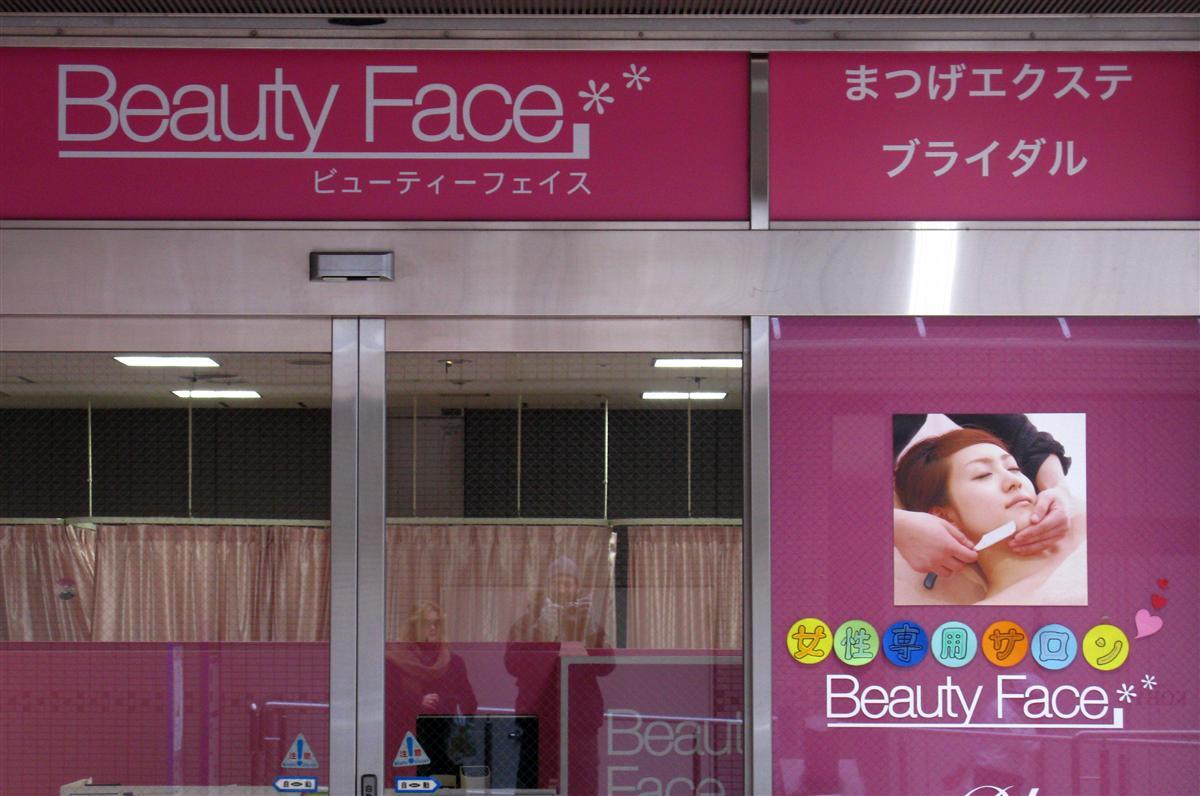
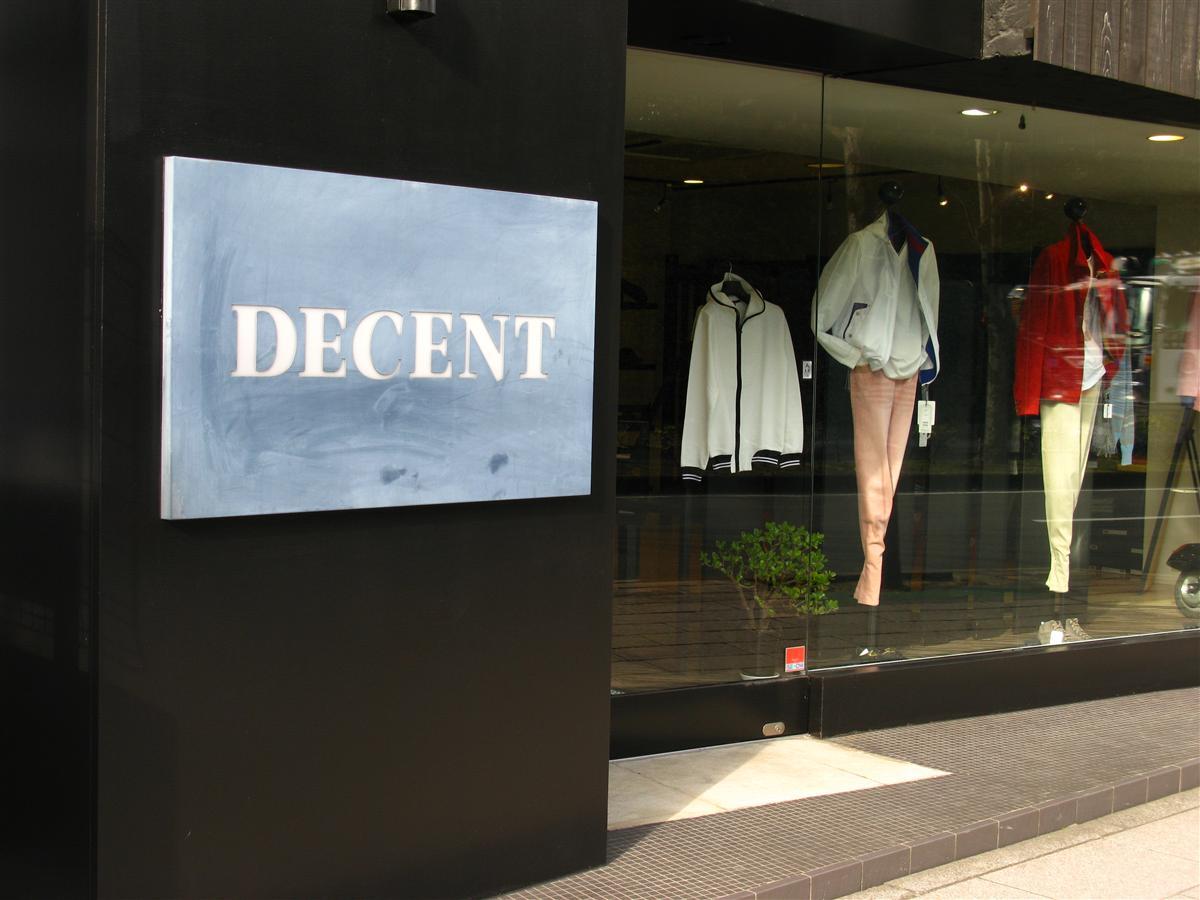
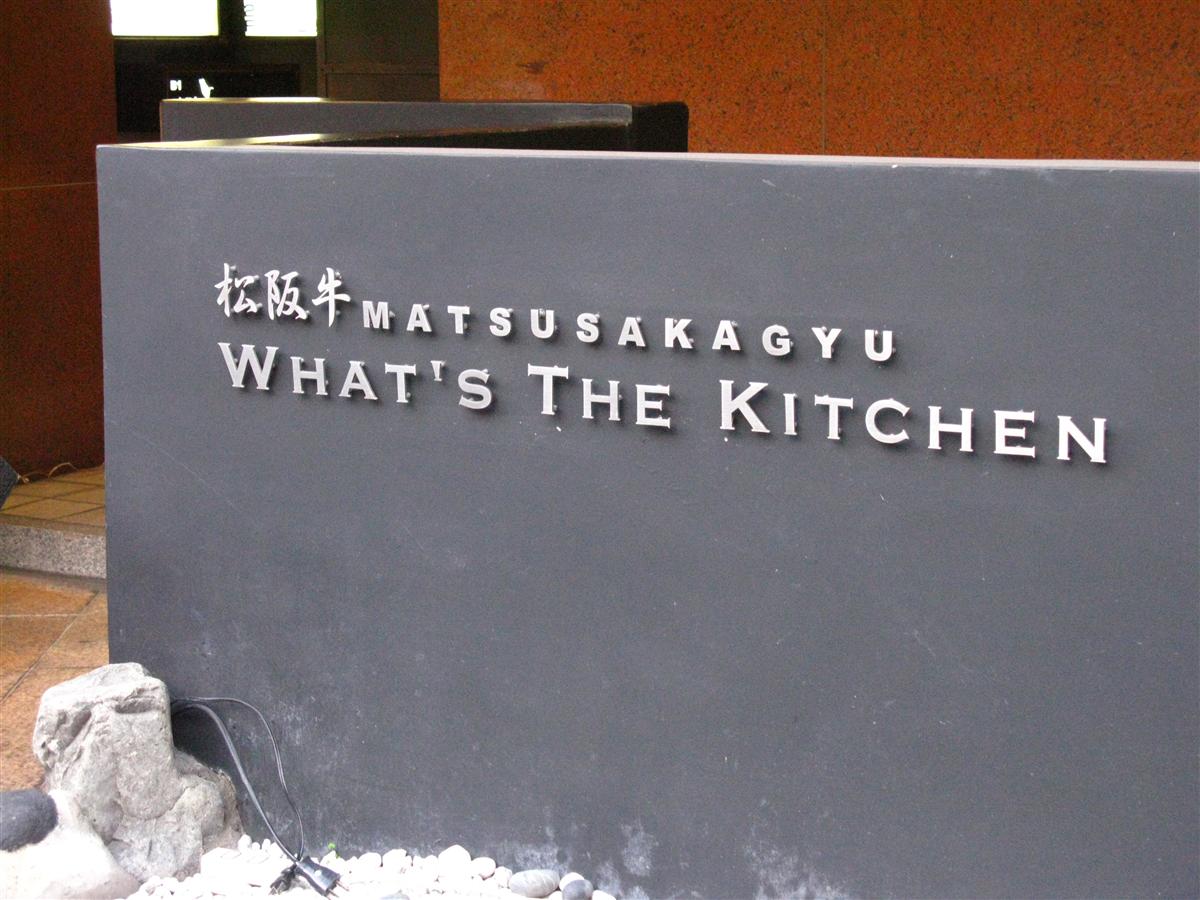
It's really interesting how the Japanese have adopted some European words, especially English ones in recent decades. So you have “resoturan” for restaurant, “intaanetto” for internet, and “basukettobooru” for basketball. They also use unaltered English (or French or Italian) words, particularly in business names. This is particularly common in eating establishments, beauty salons (or saloons, as they are sometimes called), and clothing shops. The use of English words is often awkward, however, and ends up sounding at least odd if not absolutely perplexing. Sometimes they are so incongruous or nonsensical as to be downright hilarious.  It's probably the same for us back home when we buy plaques or tee shirts with Japanese or Chinese characters on them that we think say "Peace" or "Love" but actually say "cabbage."

Here are some examples of creative uses of the English language we've come across in Japan:

 The wording for this one is a bit odd, but at least we get the idea that they do facials.


 A gourmet magazine called "Colon"


 Do I really want to drink something called "The Pungency"?


 Japanese sentence structure is a bit different and doesn't always get properly reordered for English.


 Clothing store.  This just feels like an incomplete sentence.


 Hey, at least this clothing store isn't called "Below Average".


 I'm not even sure if they only sell women's clothing here.


 Not a dentist office - a supermarket.


 A hair salon - apparently for pretentious people who used to be attractive.


 That's Tommy Lee Jones.  If you saw the film "Lost in Translation" you know about American celebrities doing commercial endorsements in Japan.  We also saw a whiskey commercial on television featuring Leonardo di Caprio.


 If you have to ask, you probably shouldn't be a restaurant.


 "I Love Woody Life" - I guess he likes camping.


 Hopefully this isn't a tattoo parlor or a brothel.


 Sometimes no translation is necessary.