Wednesday, March 6, 2013

Random Shots

Here are a few random shots taken here in Kyoto:

 Nijo-jo Castle


 Kimono fashion show in the textile district.


 Count your calories as you climb the steps out of the subway.


 Not all Kyoto's buildings are ancient temples.  This is the huge, modern Kyoto Station which services trains, subway, and buses, not to mention shopping, restaurants, food courts, and other businesses.  There are also observation areas on the upper floors with nice views of the surrounding city.


 Deborah in one of the gardens at the Nanzen-ji Temple complex.


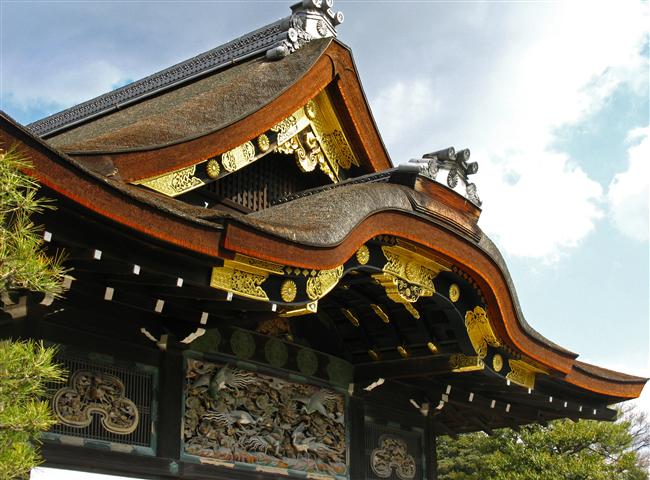
 Detail on a temple gate.


 A beautiful sub-temple at Nanzen-ji.  Note the blooms starting on the tree (probably plumb).


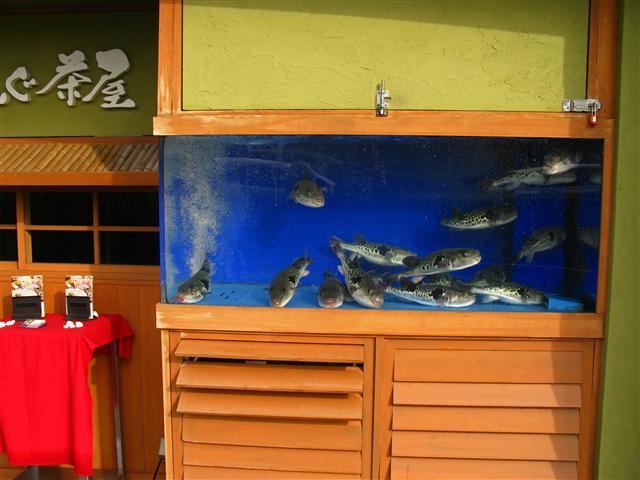
 Choose your dinner at this restaurant.


 The restaurants here have mastered the art of food display, including this frozen wave of fried rice.


 A book, a computer, and two cats - what more could a guy ask for?


Ginkaku-ji, aka The Silver Pavilion.

Tuesday, March 5, 2013

Gardens in Winter

Given a choice, we of course wouldn't have chosen winter as the time to travel in Japan. The preferred times are spring, when the weather is pleasant and the cherry blossoms are blooming, and fall, when the autumn color displays will dazzle you. Instead we are seeing high temperatures generally in the 40s and lows in the 30s – not exactly comfortable sightseeing weather, especially when all you have to come home to is an old drafty house without central heating. But in the house sitting racket you take the assignments you want when you can get them.

Winter does actually have some advantages, though. The crowds are smaller at the popular sights. The lines are shorter. The prices for hotel rooms (when not house sitting) are considerably less. Kyoto's many beautiful gardens make good use of coniferous trees, which stay green in winter. They also have their share of bare-in-winter deciduous trees, but that can make views possible that would otherwise be blocked by the leafy canopy. And many temples and shrines have moss gardens which thrive in winter.

But we're glad we're here at the end of winter, rather than the middle of it. The temperatures this week have started rising into the 50s, with predictions even for the 60s (!) for a couple of days later this week. The trees are budding up and we're looking forward to being able to venture outside without three or four layers of clothing weighing us down (also an easy way to look instantly thinner, says Deborah).

Here are a few photos taken in the the Arashiyama/Sagano area on the western outskirts of Kyoto (home to the Monkey Park mentioned in the previous post), including some lovely moss gardens.


 Pond at the garden at Tenryu-ji Temple.


 Moss Garden at Tenryu-ji


 Boats on the Katsura River.


 Villa of a late famous silent screen samurai actor.  Its gardens are open for tours.


 The actor in question.  Don't step on his petunias.


 Path through a bamboo grove.


 Moss garden at Gio-ji Temple.


 The same moss garden.


 Geishas or Meikos (apprentice geishas) or tourists who pay to be made up like Geishas.  I suspect the latter but it's hard to know for sure.  Nice to see in any case.

Sunday, March 3, 2013

Monkey Business

The Arashiyama Monkey Park lies in the mountains just to the west of Kyoto and is home to some 130 Japanese Monkeys, also known as Snow Monkeys or Japanese Macaques. They are the most northern living non-human primate. Researchers have been tracking this troop since 1957 and have named each monkey and know it's age and lineage. Technically the monkeys are wild as they live and forage out on the mountain, but they are also fed by the park staff, as well as by tourists like us who can't resist buying little bags of cut-up apple or peanuts. Cheetos are discouraged. We're not to touch the monkeys but they can grab the little morsels from our hands as long as we're in the feeding station. We're also not supposed to stare them in the eyes, which they apparently find quite upsetting. Evidently no one is concerned about encouraging begging among the monkeys. Interestingly, they are the only beggars we've seen since we've come to Japan.

 Don't feel sorry for the monkeys - they are actually outside the cage; the humans are inside.


 Deborah handing out apple chunks.


 The feeding station.


 Grooming


 Double Grooming


 From atop the Arashiyama Monkey Park, a nice view looking down on Kyoto.


 Waiting for a bus?


Friday, March 1, 2013

Market at the Shrine

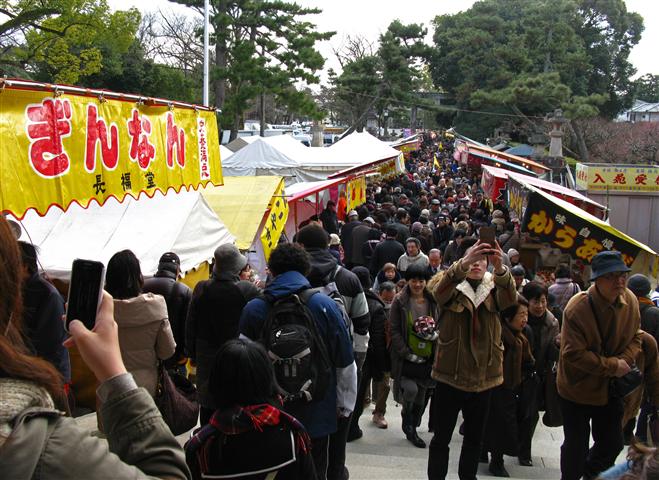
Every 25th of the month a huge market is held at the Kitano Tenmangu Shrine in northwest Kyoto. This has to be one of the most scenic locations for a market anywhere. Here you can find clothing, antiques, pottery, jewelry, fabric, old coins, hats, tools, toys… you name it. Deborah found a kimona. There are also plenty of food vendors, which allowed us to snack on desert crepes and takoyaki, or octopus balls. (Mind you, the latter refers to the shape of the fried, batter-encased octopus morsels, nothing else). 


 Kitano Tenmangu Shrine Market (one of the temple buildings in the background)


Shopping - hopefully for better coordinated outfits.


 Big crowds for a weekday


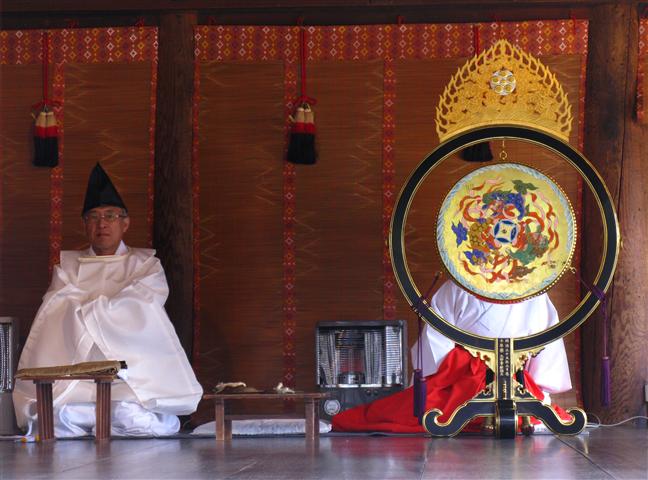
 The market doesn't preclude religious services on site.


 I think they're selling religious devotional items at these booths - another kind of market.

Wednesday, February 27, 2013

Kyoto Imperial Palace

Kyoto was the capital of Japan for over 1000 years (imagine!) until Tokyo was given that designation in 1869. The present Kyoto Imperial Palace was used from about 1331 although, like many of the temples and other wooden structures around here, it was repeatedly destroyed by fire and then reconstructed, most recently in 1854. (Thankfully the Japanese are persistent and didn't resort to building fireproof but ugly concrete boxes).  The palace compound consists of several buildings which, in addition to their significance to Japan's cultural heritage, are still used for ceremonial purposes. We took advantage of one of the twice-daily guided tours in English to get a peek inside the walls.

 One of many grand gates to the Imperial Palace compound


 The Shinshinden, the most important building on the palace grounds - which is why they don't allow us to get very close to it.


 The royal crest with chrysanthemum incorporated into the facia.


 The orange-red color, a derivation of that used in Chinese architecture, is meant to symbolize light and fire.  Deborah says she's not sure that's such a good idea given the building's history of burning down.


 Cross section showing roof laboriously made from Cypress bark and bamboo pins.  It takes 25 years to reroof the palace buildings, and the roofs last 30 years.


 The royal couple


 Tiger and elephant carving detail on a shrine in the Palace Park.


 That's craftsmanship


 The Oikeniwa Garden on the Palace grounds.

Tuesday, February 26, 2013

Kyoto House

We are now settled into our house sit for the remainder of our time in Kyoto. We have it pretty easy here because there are just three cats to feed twice a day. The cats have access to the outside so there is no litter box to clean. There are no dogs to walk, no house plants to water, and, this being winter, there is no yard maintenance. As I said: easy.

The house itself is an old 1950s wooden Japanese house. It's not without its charms with wood floors, tatami mats, and shoji screens. But it also has its quirks and shows signs of a neglectful landlord (the family we are house sitting for are renters). The house definitely shows its age as it has no insulation and no central heating. And it is COLD here. The saving grace is a pair of kerosene heaters used to keep a couple of individual rooms warm, the most important of which is the living area where we spend our waking hours when we're not out sightseeing. If we keep the doors to the room closed and the kerosene tank full the heater can keep up with the thin, drafty walls and we can stay cozy. Deborah fairly freezes when she's working in the kitchen, however, and has learned to cook really, really fast.

The other heater is a smaller portable unit kept in the bedroom but we don't run it when we're asleep – just a bit before we get in bed to take the edge off the chill. We stay toasty cuddling up under a pile of blankets and with the occasional boost of body heat from one of the resident cats, but middle-of-the-night trips to the freezing bathroom are a thing to be dreaded.

Our host family consists of an Italian/British professor, his Canadian/Japanese wife, who is a teacher, a two-year old toddler, and a 3-month old baby. They are off to Thailand on holiday while we look after their three cats Mimu, Sookie, and Atticus. Mimu is the most social and hangs out with us a fair bit. Sookie likes attention too but seems to prefer to hang out in the unheated upstairs area, although she is warming up to us more and more. Atticus we were told has taken to spending more and more time outside or away and that we might not see him at all during our stay. So far that has been the case. His dinner usually is gone by the next morning, but who knows who is eating it.

This house is in the northern part of the city, not too far from a subway station so we can get around fairly easily. It's not a palace but it will serve us well as a base for exploring this beautiful city. And of course the price is right.


 Hard to see behind the trees, but this is our temporary home in Japan.


 Living room.


 Upstairs


 Very steep stairs.  My feet only fit sideways on the treads.


 Sookie


 Mimu - preheating our bed


 The doorways are all low. To avoid a major concussion I have to duck constantly or just continually walk around hunched like I have an advanced case of osteoporosis.


 Sookie hanging out on the roof.


Saturday, February 23, 2013

The Golden Pavilion

You can't walk two blocks in Kyoto without bumping into a temple, but one of the most famous is Kinkaku-Ji, or the Golden Pavilion. It was built by a Shogun in 1397 as his retirement villa. After his death, in accordance with his wishes, his son converted it to a Buddhist temple. In 1950 some zealot burned it to the ground, but within five years it had been rebuilt to exact original design, except more of the signature gold leafing was added. Set at the edge of a reflecting pond, it's supposed to be even more picturesque in autumn when the maples are in full color.

 The Golden Pavilion


 Street Scene.  Like this bicyclist, you see a fair number of Japanese wearing masks.  They are either worried about air pollution (which isn't evident here), or they are germaphobes, or they are preparing to perform surgery.


 Gate to the Imamiya-Jinja Shrine


 Imamiya-Jinja Shrine


 Kitano Tenmangu Shrine. Worshipers line up to bow, make an offering, pray and ring the bell.


Deborah